Written by: Salome Finau
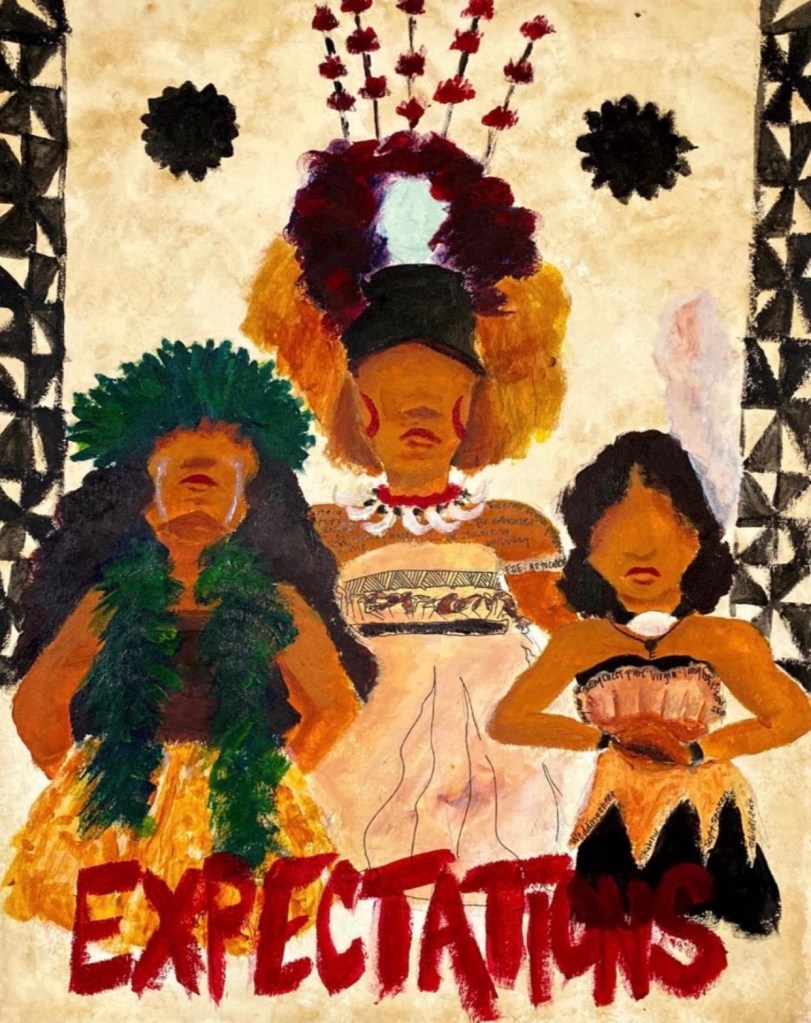
We often are able to talk about what it means to be a minority in universities here in the United States of America, but when we dig deeper into specific racial groups the representation starts to disappear. Through the testimonies of staff, athletes, and students, both men and women, Pacific Islanders are able to finally express their emotions and experiences here at Brigham Young University.
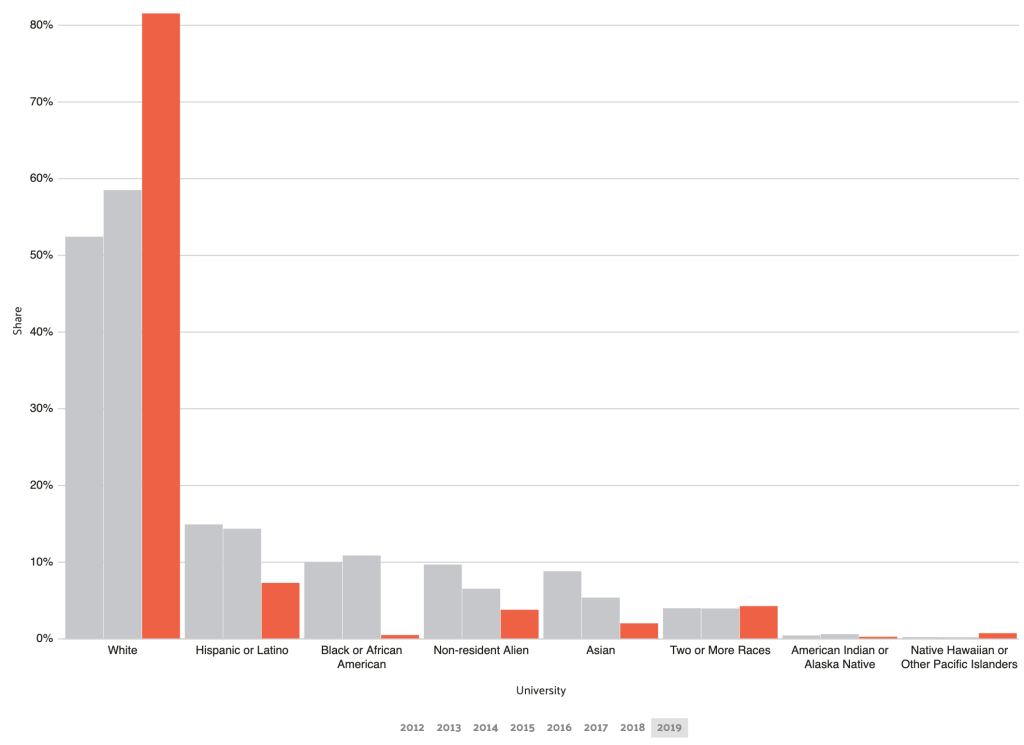
In order to understand how small of a diaspora the Polynesian student body makes at Brigham Young University, we as an audience have to be able to take a step back and look at the numbers. According to a study done by DATA USA in 2019, Pacific Islanders only make up about 0.6% of the student body. Whereas their white counterparts make up a whopping 81% in comparison. From a mathematical standpoint, it is easy to see that Polynesian Students are outnumbered in every way. This also has a butterfly effect of limiting their forms of representation in the classroom, and resources for those who are also experiencing the same types of hardships on-campus that others may not experience.
Sonny Makasini, who is currently a football player here at BYU claims, “Being a Polynesian boy at BYU has been a good experience for me. I feel like I’m treated like any other student except for everyone assuming I play football. I feel like besides the football team I Don’t really see a lot of other Polynesians at school.”
Yet there are other students who also claim to feel right at home on the campus grounds.
“It’s like living in the land of milk and honey. Everyone loves you.” claims football player and student Burke “Nava” Parker
It is important to recognize that without things such as athletics and extracurricular activities like BYU Luau and the renowned Pacific Islander Club, many have explained that it is difficult to be able to find a place here at the university where they feel as though they fit in. It also does not help with the seemingly common racial stereotype that many Polynesians only excel in sports. As Makasini briefly explained, many young Pacific Islander men and women are familiar with the common assumption that their racial group is “perfectly built” for football and other contact sports such as rugby. Due to this harmful racial stereotype, many are not pushed to pursue more in life beyond sports. Yet what is one supposed to expect when they are only represented in the media when it solely comes to athletics.
Coach Kalani Sitake, has made an effort to turn this exact racial stereotype around into something positive while he works as the head coach for Brigham Young’s football team. Although he has difficulty recruiting for the team, even though he knows he could get “better players” if he only focuses on athletics, he wants to push his boys both on the field and in the classroom.
According to DeseretNews Sitake claims “I’ve had people tell me, ‘Why do you do that? Why don’t you just play football?’ Because we’re BYU. That’s why. We’re different. We’re going to do service and help people and be in contact with our fans that need our help and uplift lives. That’s why we came here. Others may not want to do that. They just want to play football and not really focus on academics. Here, you have to do a lot of work. So I’m looking for the best.”
But how do Polynesian students feel inside the classroom? According to a certain first-generation female student, this is what Soana Laulotu has said,
“I feel like I have my own responsibility to keep on doing my best. You know cause there’s barely any representation for poly women that further their education to college level. To be a Polynesian girl at BYU especially, it definitely feels like there’s a certain pressure.”
Being the only person of color in a classroom can be daunting, especially if there is no athletic scholarship to back you up with extra resources such as tutors and advisors. This is when many students shy away from asking questions for fear of seeming inferior to their peers. It is also safe to assume that Imposter Syndrome is common among these students, especially when many different sources claim to have the topic of Affirmative action constantly being thrown in their face for their acceptance on campus.
This also does not help with also being a Pacific Islander woman on campus. As Laulotu briefly mentioned, there is a certain pressure on campus as a Polynesian woman. There are cultural expectations to be able to further their education while also bringing up their family’s public reputation. It is considered a big accolade to be able to attend BYU in the culture, specifically in the part of the Polynesian population that are members of the Church of Jesus Christ of Latter-Day Saints, so dropping out or failing out of school is not an option.
The dating life in Provo, Utah is also said to be able to be too kind for Polynesian women. Countless sources recall men only hitting on them when their suitors are return missionaries from their homelands, or being constantly berated for being “too manly” or horrible statements such as “looking like Maui” from the Disney film Moana.
All of these different experiences are valid and deserve to be recognized. We as Pasifika people deserve to be in the limelight beyond sports. We deserve to have just as much opportunity as anyone else. I can only hope that this article can help start the conversation.
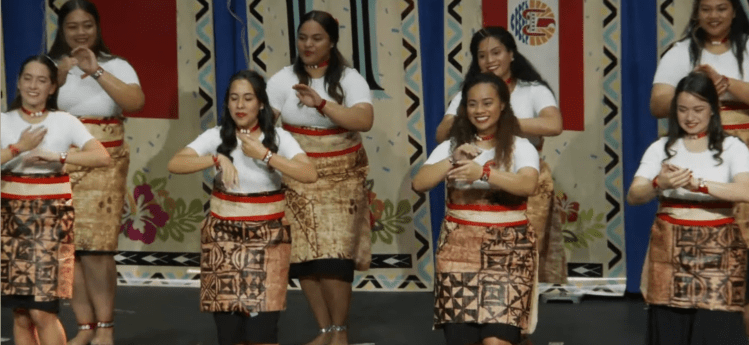
“To be a Polynesian girl at BYU especially, it definitely feels like there’s a certain pressure.”
-Soana Laulotu
 Salome Online